



By Jared Moore, ISA Certified Arborist #WE-15983A
When it comes to maintaining healthy, resilient trees—especially in Arizona’s challenging climate—deep root fertilization is one of the most effective tools we have. This treatment not only delivers nutrients directly into a tree’s active root zone, but also addresses something even more fundamental: soil health.
Healthy Trees Start with Healthy Soil
Trees rely entirely on the soil around them for water, oxygen, and nutrients. But in most landscapes—especially in urban or suburban environments—soil conditions are far from ideal. Compaction from foot traffic, construction, and irrigation systems can prevent air and water from reaching the roots. Years of synthetic fertilizers or poor organic matter levels can leave the soil depleted, sterile, and biologically inactive.
That’s why the focus of my deep root fertilization program is as much about restoring soil function as it is about feeding the tree itself.
What Is Deep Root Fertilization?
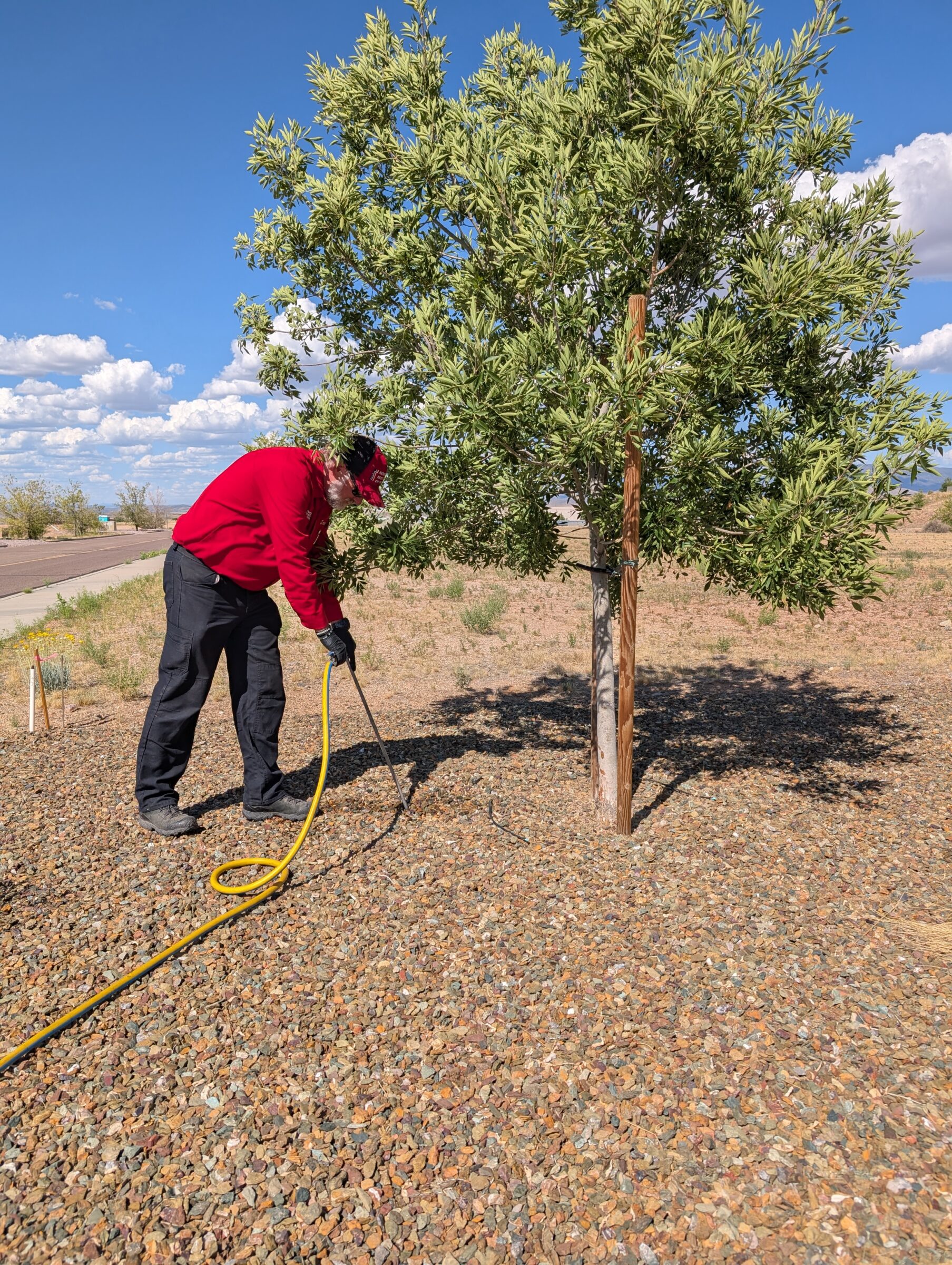
Deep root fertilization involves injecting a custom-blended liquid fertilizer 6 to 12 inches deep into the soil, directly where tree roots can use it. Unlike surface-applied fertilizers that can evaporate, leach away, or sit above compacted ground, this method targets the root zone—where nutrients matter most.
The Role of Low-Salt, Slow-Release Fertilizer
Trees grow best when they’re fed steadily, not in short-lived bursts. That’s why I use a low salt index, slow-release fertilizer. This formulation releases nutrients gradually over several months, reducing the risk of salt buildup and root damage—common side effects of many high-salt, quick-release lawn fertilizers.
Low-salt fertilizers protect sensitive root systems and preserve microbial life in the soil, which is crucial for nutrient cycling and disease suppression.
What I Add—And Why It Matters
My tree-specific blend includes key amendments that do more than fertilize—they actively build soil health:
Humic Acid
This natural compound improves soil structure, increases water retention, and enhances nutrient availability. It also binds to toxins, buffers pH imbalances, and stimulates root growth. Humic acid acts like a sponge in the soil—holding nutrients and water in place for when roots need them most.
Micronutrients
In addition to nitrogen (N), phosphorus (P), and potassium (K), I add trace minerals like iron, manganese, zinc, boron, and copper. These elements play essential roles in photosynthesis, enzyme production, and overall immune function. Trees often show signs of micronutrient deficiency—such as chlorosis, tip dieback, or poor growth—even when major nutrients are present.
Molasses-Based Carbohydrates
A unique part of my program is the inclusion of molasses-derived carbohydrates, which feed beneficial soil microbes. These microbes help break down organic material, convert nutrients into plant-available forms, and create a living, breathing soil ecosystem. Feeding your soil life is like feeding your tree’s support team—it creates a self-sustaining, resilient underground network.
Why Soil Health Matters More Than You Think
When soil is compacted, chemically imbalanced, or biologically inactive, roots can’t do their job. Trees in poor soil struggle to access nutrients, are more susceptible to drought stress, and become easy targets for pests and disease.
By improving soil structure, adding organic compounds, and reintroducing biological life, deep root fertilization helps trees regain their natural defense systems and grow stronger from the roots up.
Best Timing and Results
In central and northern Arizona, the best times for treatment are early spring or early fall, when trees are actively growing roots or recovering from summer stress. However, treatments can be performed throughout the growing season depending on a tree’s condition.
Visible results may include:
- Greener, denser foliage
- Stronger root systems
- Improved drought resistance
- Better response to pruning or damage
- Reduced pest and disease activity
Long-Term Investment in Tree Health
Think of deep root fertilization as soil restoration for trees—it builds long-term vitality, not just short-term color. Trees treated this way are better equipped to handle drought, heat, disease, and the daily stresses of life in a built environment.
If your trees are looking tired, showing signs of yellowing, or growing unevenly, deep root fertilization may be the missing piece.
